

The art of bondage: play for women in BDSM
Bondage for women: my honest examples, games, and tips for playing safely with rope, trust, and surrender.

Glossary
The most visible side of BDSM, and the only one whose risks show up measurably in a nerve conduction study.
Bondage is consensually tying up, cuffing or otherwise restraining a partner, for the arousal, the look of it, or the physical feeling it gives. It is the B in BDSM. What gets used ranges from rope and cuffs to a scarf or a necktie.
| In other languages | The same. Bondage is an English word, used unchanged in Dutch. See the encyclopedia entry. |
| What with | rope, cuffs, chain, bondage tape, leather, latex, cable ties, or just a scarf or necktie |
| How common | in a 1996 American study, 24 percent of students reported bondage fantasies |
| The rule of thumb | two fingers should fit between the rope and the skin |
| Main risk | nerve compression: it happens fast, is cumulative and often irreversible |
For most people bondage starts with something that is already in the house. A scarf around the wrists, hands above the head, a necktie to a bedpost.
What happens then is not physical but mental. The encyclopedia describes the appeal as the freedom that comes with physical passivity, and as the psychological arrangement in which control is handed over. You cannot do anything anymore, and so you do not have to.
The heavier end looks different. A box tie that pins the arms behind the back, a hogtie, a chest harness, or a full suspension in rope. Between those lies an enormous range, and almost no one works through all of it.
The risks of bondage are better documented than those of almost any other form of BDSM, and they are not vague.
There are two kinds of problem. The first is circulation. When the outflow is blocked the skin turns red and then purple, and when the inflow is blocked it turns white. The best-known rule of thumb belongs here: the rope has to be loose enough to slide two fingers under it.
The second is more serious. The account of bondage techniques is blunt about it. Nerve damage happens very fast, is cumulative and often irreversible. The vulnerable spots are the knees, elbows, groin and armpits, and the radial nerve in the upper arm.
That is not theory. Khodulev and colleagues show in Cureus that a short suspension can already be enough to knock out extension of the wrist and fingers, and that recovery can take months. In their group the radial nerve was the affected nerve in nine out of ten rope injuries.
The appeal is in the loss of choice. Someone who is tied up no longer has anything to decide, and for many people that is the whole point.
What measurably happens has been studied once. Sagarin and colleagues took saliva samples from 58 people practicing BDSM in Archives of Sexual Behavior and saw cortisol rise in those who were tied up, received stimulation and followed orders. In the ones who said afterward that it had gone well, that value dropped again and the felt connection went up.
Nerve damage does not ask whether someone enjoyed it. Bondage is the form where good intentions help the least.
The usual route runs from soft to tight and from short to long. Wrists first, then arms, then more, checking along the way whether the hands stay warm.
What separates the careful from the sloppy is presence. The encyclopedia states two things outright. Never leave someone who is tied up alone, and keep a pair of scissors within reach so you can cut them loose in an emergency. On top of that, change position at least once an hour.
For some positions, being short is built in. Strappado and suspension, according to that same source, do not allow long periods, because of the risk of lasting damage to joints and tissue.
The ordering most people use runs along the body, not along the level of difficulty.
Upper-body ties are the best known. The box tie sets the arms behind the back with the forearms horizontal; chest bondage lays bands above and below the breasts. Both sit close to the radial nerve, which makes them the place where most damage happens.
Lower-body ties run from an ankle tie to a frog tie, where the lower leg is set against the thigh. The hollow of the knee and the groin are the spots to avoid here.
Whole-body ties are the hogtie and the shrimp tie, where the body is forced into a single shape. These are positions you cannot hold yourself, and so positions where the clock is the most important tool.
Suspension stands apart from that. Partly or fully off the ground, with the weight on a few points instead of spread across the body. That is the category the documented nerve injuries come from.
Alongside that there is the whole world of gear that replaces the rope: cuffs, an armbinder, a straitjacket, bondage tape or a trestle. Each of those shifts the risk. Metal pinches more sharply than rope, tape cannot be readjusted, and a piece of furniture takes over the work of holding a position but makes time itself less noticeable.
What all these forms share is that the intensity is not in the technique. For most people, two wrists in a scarf do exactly the same thing as an elaborate tie; what differs is how it looks and how much can go wrong.
“If it does not hurt, it is fine.” Nerve compression does not hurt at first. The first signal is tingling or numbness, and that is already late.
“Tighter is better.” The two-finger rule exists because being tied tight adds nothing to the feeling of being tied. What it does add is risk.
“Suspension is the logical next step.” Suspension is a different category, with its own risks and its own learning curve. Anyone who does not yet have a sure hand on the ground does not belong in the air.
“Cable ties and tape are handy.” They are cheap and they hold fast, and that is exactly the problem. You cannot readjust them and they cut in the moment someone pulls. Anything you cannot loosen in one motion does not belong around a wrist.
I have been doing bondage for twenty-five years now, with real hemp rope, and on a BDSM date it is the part I have grown slowest at.
Surprisingly little is needed. People come in with images of complicated patterns, and what actually happens is that two wrists are tied and someone, for the first time in months, has to do nothing. The pattern is for the photo; the being tied is for the head.
Along the way I ask whether the hands are warm. Not whether it feels good. To that first question I get a usable answer, to the second one usually not.
And one thing I hear from women that is written down nowhere: the moment something happens is not when the rope goes tight, but when the first length of rope passes over the skin. Everything after that is confirmation of what has already been decided by then.
On this site, the art of bondage is about how you begin, and shibari and connective kink is about the Japanese side of it.
Off this site, the article by Khodulev and colleagues is free to read and the most concrete thing there is on how fast rope injury happens and how long recovery takes.
Frequently asked questions
Two fingers have to fit between the rope and the skin. Tighter adds nothing to the feeling of being tied, only risk. When the outflow is blocked the skin turns red and then purple; when the inflow is blocked it turns white.
Nerve compression. It happens very fast, is cumulative and often irreversible. The vulnerable spots are the knees, elbows, groin, armpits and the radial nerve in the upper arm. The first signal is tingling or numbness, and that is already late.
Change position at least once an hour, and never leave someone who is tied up alone. Keep a pair of scissors within reach. Strappado and suspension do not allow long periods, because of the risk of lasting damage to joints and tissue.
With something that is already in the house: a scarf around the wrists, hands above the head. For most people, two wrists in a scarf do exactly the same thing as an elaborate tie; what differs is how it looks and how much can go wrong.
Victor, a gigolo with twenty-five years of experience in BDSM and a background as a psychotherapist. Bondage is on his yes-list, light or firm, with real hemp rope. You can put a question to him without obligation through the contact form or first chat for free.
Blog
From the first scarf to shibari and confinement: what being tied does to you, and how you build it up.
Bondage for women: my honest examples, games, and tips for playing safely with rope, trust, and surrender.
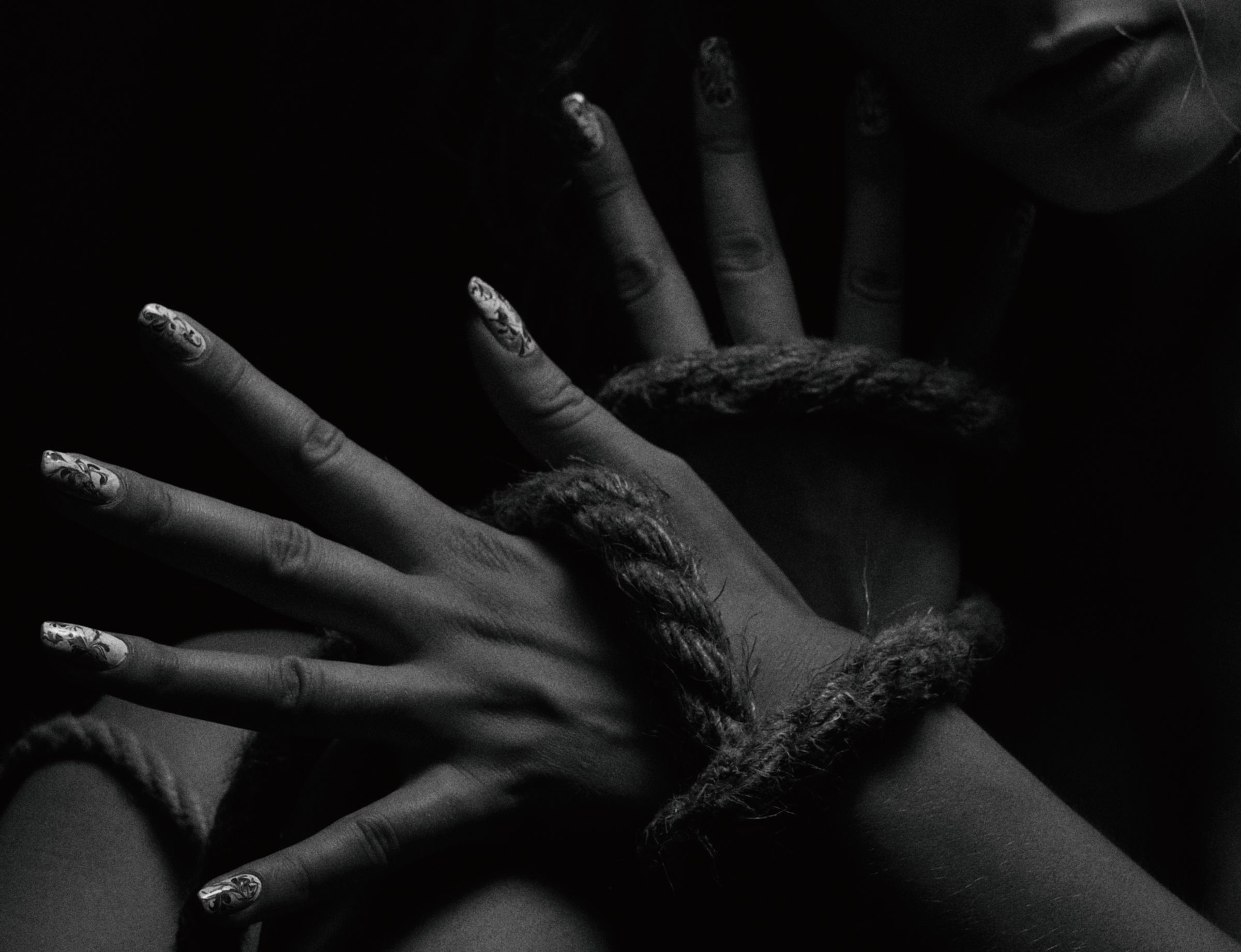
Shibari rope bondage and connective kink, explained through aesthetics, trust, and a gentle way to begin as a beginner.

Confinement in BDSM is physical restriction, vulnerability, and deep surrender, with full care for safety, a safeword, RACK, and loving aftercare.
Related service
Being tied is on my yes-list, light or firm, with real hemp rope. The service page shows how we agree beforehand on how far it goes.
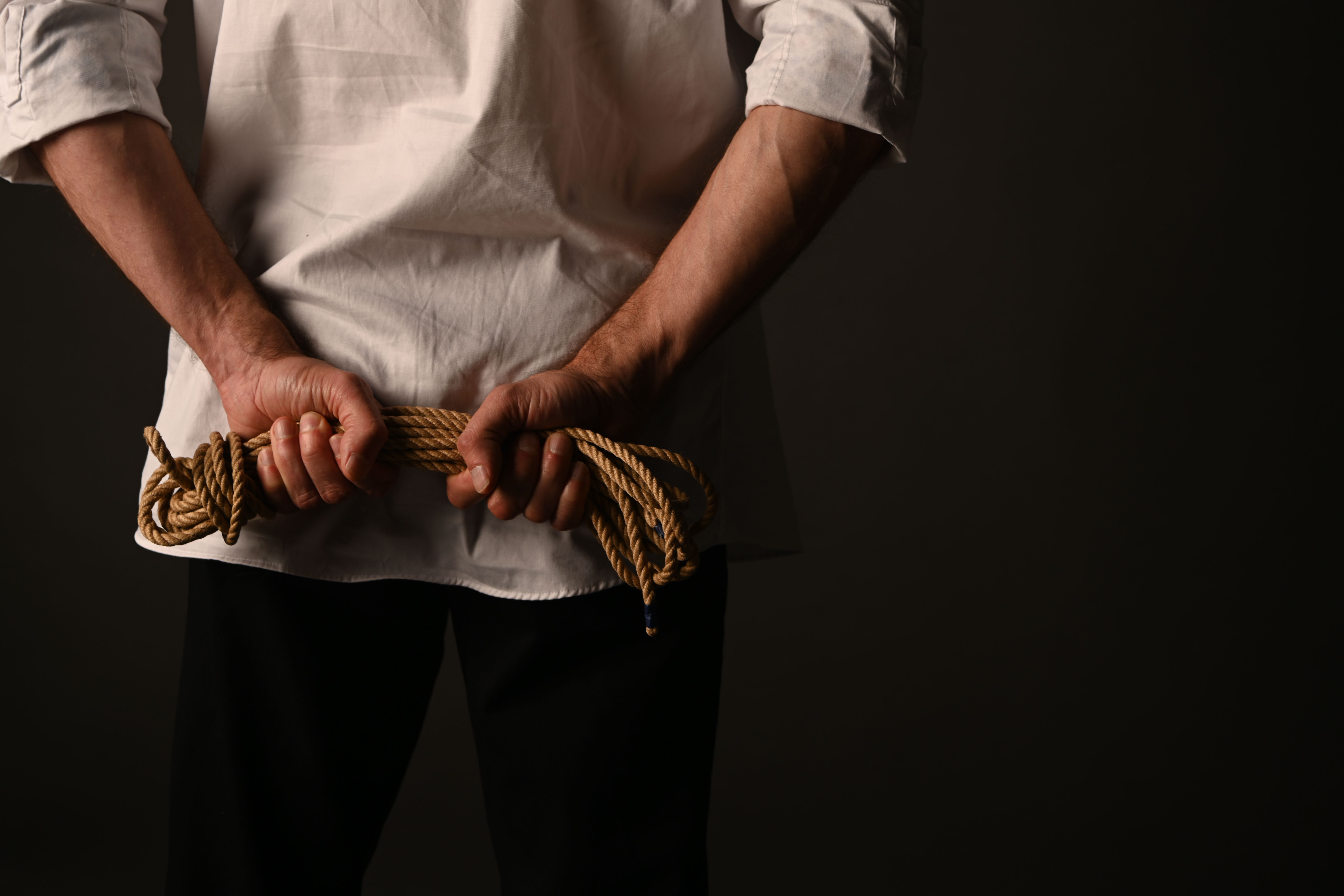
Book a BDSM date with a gigolo who has 25 years of experience. Safe, intense, always within your limits, from soft bondage to dominance.
Learn more
I'm Victor. What stands out to me most after twenty-five years is how little it takes: two wrists that are tied and someone who, for the first time in months, has to do nothing. Want to know how that goes? Send me a message. No obligation, I'll text you back whenever suits you.
A woman or a couple? Lovely that you are here, I would love to speak with you.