
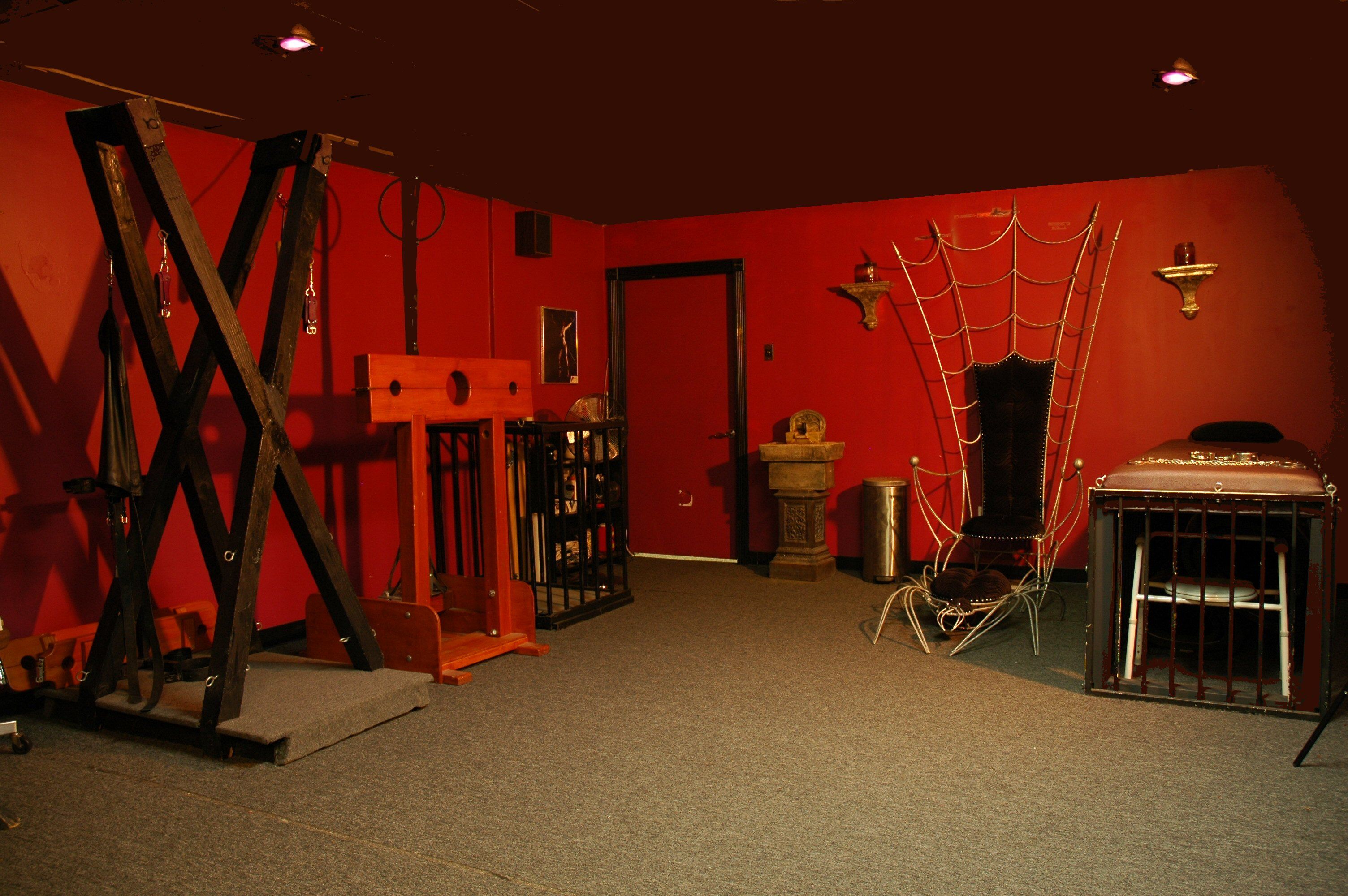
SM Room for Rent: BDSM Rooms and Play Spaces in the Netherlands and Beyond
BDSM rooms and SM play spaces for rent across the Netherlands, Belgium, France and Germany: SM cottages, SM B&Bs, setup, prices and what to check.

Glossary
The address book of the scene. Where groups, parties and play spaces are found, and what of your profile is visible.
FetLife (a brand name, used unchanged) is a social network for people with an interest in BDSM, fetish and kink. FetLife expressly presents itself not as a dating site but as a social network: profiles, groups that work as a forum, and event announcements. The site belongs to the Canadian company BitLove and has existed since 2008.
| Dutch term | identical; FetLife is a brand name and is not translated |
| What it is | a social network, not a dating site and not a matchmaking agency |
| Since | 3 January 2008, founded by John Kopanas (JohnBaku on the site) in Montreal |
| Size | 504,416 European profiles in Fay et al. (2014); Wikipedia names over 12.6 million accounts |
| How it is organized | by geographic area, plus tens of thousands of groups by topic |
| Main limitation | your profile, your role and the relationships you list are visible to other members |
Mostly as an address book. Dutch and Flemish users find the regional groups there, the announcements of fetish parties and munches, and the people who rent out a play space.
That last part is more concrete than it sounds. In my overview of play spaces in the Netherlands, Belgium and Germany, for over half of the addresses “via Fetlife” is the only contact channel. No website, no booking system, only a profile. Anyone who searches without an account does not see that part of what is on offer.
The ordering works from the bottom up. In their analysis of the European part of FetLife, Fay and colleagues describe that membership of one geographic area is required, usually at the level of a municipality or region. Above that sit the topic groups: 35,153 of them in their dataset.
From frustration. John Kopanas, a software developer in Montreal, could not manage to find women with the same preferences as him, built a site called FriendsWithFetishes in 2007, and relaunched it on 3 January 2008 as FetLife.
A profile consists of your age, gender, orientation, role and a list of fetishes you are curious about. On top of that you can list relationships with other members, and those are shown openly: Fay and colleagues note that listed relationships are readable by all members.
The search function is limited on purpose. You cannot search by age or gender, and blog posts can only be found through the writer’s tags. That makes the site less usable as a catalog, and that is exactly the intention.
Because it is the only place where the whole scene of a region is gathered in one spot.
The pull sits not in the network itself but in what hangs off it: a calendar of real evenings, groups about technique and limits, and the chance to read someone for months first.
As for the division of roles, it is less one-sided than people expect. Fay and colleagues found that the dominant roles (Dom, Domme, Mistress, Master) fill 23.39 percent of the roles and the submissive roles (Sub, Slave) 25.15 percent, which they call a remarkable balance.
FetLife is a notice board and not a matchmaker. There is no screening, no verification of who someone says they are, and no one watching over what happens offline afterward.
“FetLife is a dating site.” The site expressly distances itself from that, and the setup shows it: the search function is too limited to select people by their characteristics. Fay and colleagues describe FetLife as a network in which the social is primary and the partner market secondary.
“What you put there stays inside.” Not just like that. Early in 2014 researchers collected data on every single member of the European part of the site, starting from the area codes. They left names, photos and messages alone, but the reachability of half a million profiles in a row was demonstrated with it.
“There is always a button to report abuse.” In 2012 a dispute arose over the rule that members may not make criminal accusations against other members in public. Users felt that this stops victims of assault from warning others; FetLife cited the risk of defamation.
“Sites like that are just there.” Also not. In January 2017 FetLife removed hundreds of groups and temporarily halted the creation of new groups, under pressure from its payment processor. The Electronic Frontier Foundation called that censorship and described how a credit card network closed both of FetLife’s business accounts, backed by complaints about “blood, needles, and vampirism” and further “illegal or immoral reasons”.
I am Victor, a gigolo, twenty-five years in BDSM and trained as a psychotherapist. I use FetLife myself, and not as a shop window: I post writing there, and the discussion that follows is sharper than what I hear elsewhere. When I put up a piece about BDSM gigolos, it went straight to aftercare, and that question sharpened my own way of working.
Something predictable happens to women who are new there: an empty profile with a female gender brings a mailbox full of messages within a day. A woman who reads along in groups for a few weeks first, before filling in a profile, is troubled by that much less.
On this site there is the overview of play spaces where you can see how many addresses are reachable only via FetLife, and the podcast interview is about, among other things, a discussion that arose there. For the evenings announced on it, fetish party is the way in.
Beyond this site, the study by Fay and colleagues is the only one to map the scene on this scale, and the Electronic Frontier Foundation explains why a site like this depends on its payment processor.
If FetLife gives you the idea to try something you would rather not do with someone you know, then a conversation is the first step. The page on the BDSM date explains how such an evening is prepared, without a profile or account.
Frequently asked questions
No. FetLife is set up as a social network and the search function is deliberately so limited that you cannot search by age or gender. In their analysis of the European part, Fay and colleagues describe FetLife as a network in which the social is primary and the partner market secondary.
FetLife is closed to logged-in members, but not private: your profile, your role and the relationships you list are readable by other members, and early in 2014 researchers collected data on every single European member. FetLife also does not verify who someone is, so you have to do the screening yourself.
Mostly as an address book: regional groups, announcements of fetish parties and munches, and people who rent out play spaces. In the overview of play spaces on this site, for over half of the addresses a FetLife profile is the only contact channel there is.
With Victor, a gigolo with twenty-five years of experience in BDSM and a background as a psychotherapist. He uses FetLife himself and mostly sees women who are new there caught off guard by their mailbox; his advice is to read along first and only then fill in a profile. You can send a message with no obligation through the contact form or chat for free first.
Blog
The overview of play spaces, a large part of which is reachable only via FetLife, and the interview in which a discussion on FetLife opened the conversation about aftercare.
BDSM rooms and SM play spaces for rent across the Netherlands, Belgium, France and Germany: SM cottages, SM B&Bs, setup, prices and what to check.

The full transcript of BDSM Vrouw Podcast #35, where Mistress Moria asks Victor about his work, his limits, aftercare, and the taboo around a gigolo.
Learn more
I am Victor. I use FetLife myself, and if you want to know how much of yourself you have to give away or how to judge an invitation, send me a message. No obligation, and you do not have to be a client to ask something.
A woman or a couple? Lovely that you are here, I would love to speak with you.